
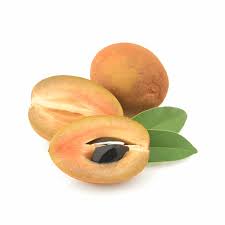

 1. Description
Common Names: Sapota, Chikoo, Sapodilla
Local Name (in Kerala): Sapota / Sapodilla / സപ്പോട്ട
Scientific Name: Manilkara zapota
Appearance:
- Round or oval fruit with rough brown skin
- Flesh is sweet, grainy, and brownish
- Contains 1–6 shiny black seeds
Taste:
- Very sweet and malty, like brown sugar
- Eaten fresh or used in milkshakes, desserts, and jams
Nutritional Value:
- Rich in natural sugars, dietary fiber, Vitamin C, and antioxidants
2. How to Plant
- Climate: Prefers warm, tropical or subtropical climates
- Planting Method:
- Use grafted plants for quicker results
- Dig a 2×2 ft pit and fill with garden soil + compost + cow dung
- Spacing: 20–25 feet between trees
- Best Time to Plant: June–August (rainy season) or Feb–March (irrigated land)
3. Plant Size
- Height: Grows up to 30–40 feet
- Canopy Spread: Wide, round, and dense
- Growth Rate: Moderate to fast
4. Fruiting Time
- Time to Fruit:
- Grafted plants: 3–4 years
- Seedling plants: 6–8 years
- Harvesting Season: Twice a year – February–March & September–October
- Yield:
- Mature tree: 2000–3000 fruits annually
- High yield after 8–10 years of age
5. Plant Type
- Type: Evergreen tropical fruit tree
- Lifespan: Long-living, productive for 50+ years
- Growth Habit: Upright with strong branches
6. Caring Tips
 Sunlight
- Requires full sunlight for better fruiting (6–8 hours)
 Watering
- Water twice a week in summer
- Less frequent during rainy season
- Young plants need more care
- Avoid overwatering (can cause root rot)
 Soil
Soil
- Grows best in well-drained, loamy or sandy soil
- Soil pH: 6.0–8.0 (neutral to slightly alkaline)
 Fertilizer
- Apply organic manure/cow dung every 3–4 months
- Use NPK (10:10:10) or fruit fertilizer
- Add micronutrients like zinc and iron yearly
 Pruning
- Trim to shape the tree and remove dead/diseased branches
- Keep center open for light and air
 Pest & Disease Control
- Watch for fruit flies, leaf webbers, mealybugs
- Use neem oil spray or organic insecticides
- Ensure good drainage to avoid fungal diseases
 Mulching
- Use dry leaves or coconut husk around the base
- Retains moisture, improves soil, controls weeds