

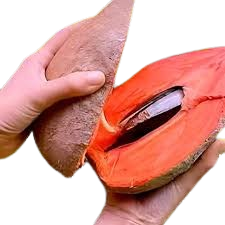
✅ 1. Description
Common Names:
Mamey Sapota, Rayan, Wild Sapota
Scientific Name: Manilkara hexandra
Appearance:
- Small to medium-sized round or oval fruits
- Rough, brownish skin
- Sweet, grainy, creamy pulp
- Contains 1–2 large black seeds
Taste:
Milder and more earthy compared to chikoo (sapodilla), with a naturally sweet flavor
Special Feature:
Hardy fruit tree that thrives in dry areas; fruits are nutrient-rich
Uses:
Eaten fresh or used in traditional medicine for digestive and energy-boosting properties
🌱 2. How to Plant
- Propagation: By seeds (fresh) or grafting for better yield
- Soil: Well-drained loamy or sandy soil
- Planting Season: Early monsoon or pre-monsoon (June–July)
- Spacing: Keep at least 5–6 meters distance between trees
- Depth: Sow seeds 1 inch deep and water immediately
📏 3. Plant Size
- Height: Can grow up to 8–12 meters (natural)
- Growth Rate: Slow-growing, strong hardwood tree
- Canopy: Dense and wide branching
⏳ 4. Fruiting Time
- First Fruiting: 5–8 years after planting from seed
- Season: Late summer to early monsoon (May–July)
- Flowering: Occurs before fruiting (February–April)
🌳 5. Plant Type
- Type: Perennial, evergreen fruit tree
- Climate: Thrives in dry, tropical, or subtropical areas
- Lifespan: Long-lived, can produce fruits for decades
🌼 6. Caring Tips
☀️ Sunlight:
- Requires full sun (minimum 6 hours daily)
💧 Watering:
- Young plants: Water regularly but avoid overwatering
- Mature trees: Drought-resistant; water only during long dry spells
🌱 Soil:
- Prefers slightly alkaline to neutral soil
- Ensure good drainage to prevent root rot
🌿 Fertilizer:
- Apply compost or cow dung twice a year
- Use mild NPK (5-5-5) during growth phase
✂️ Pruning:
- Prune to shape in early years
- Remove weak, dried branches once a year
🐛 Pest Control:
- Usually pest-resistant
- Monitor for leaf-eating insects; spray neem oil if needed